


 Episode #400
8 Years, 400 Episodes, and the Lessons We Learned the Hard Way
What does it actually take to build a top-ranked leadership podcast from scratch, and keep it going for 400 weeks in a row?
8 years ago, Em convinced me to walk away from my role as CEO of a multi-billion dollar business to build a micro-startup with a simple premise: give away your very best insights for free on the podcast, and trust that the impact will follow. Our purpose became: to improve the quality of leaders, globally.
What followed was 400 episodes (570 if you include the short Monday episodes), 8 million downloads, a global audience, and more lessons than either of us expected — about burnout, about money, about the milestones that don’t deliver what you think they will, and about what it actually takes to build something that lasts.
In this episode, Em and I go behind the scenes of Your CEO Mentor and this podcast for the first time — sharing what we got wrong, what we’d do differently, and the moments that meant more than any revenue milestone ever did.
So, let’s get into it!
LISTEN ON


Generate Your Free
Personalized Leadership Development Podcast Playlist
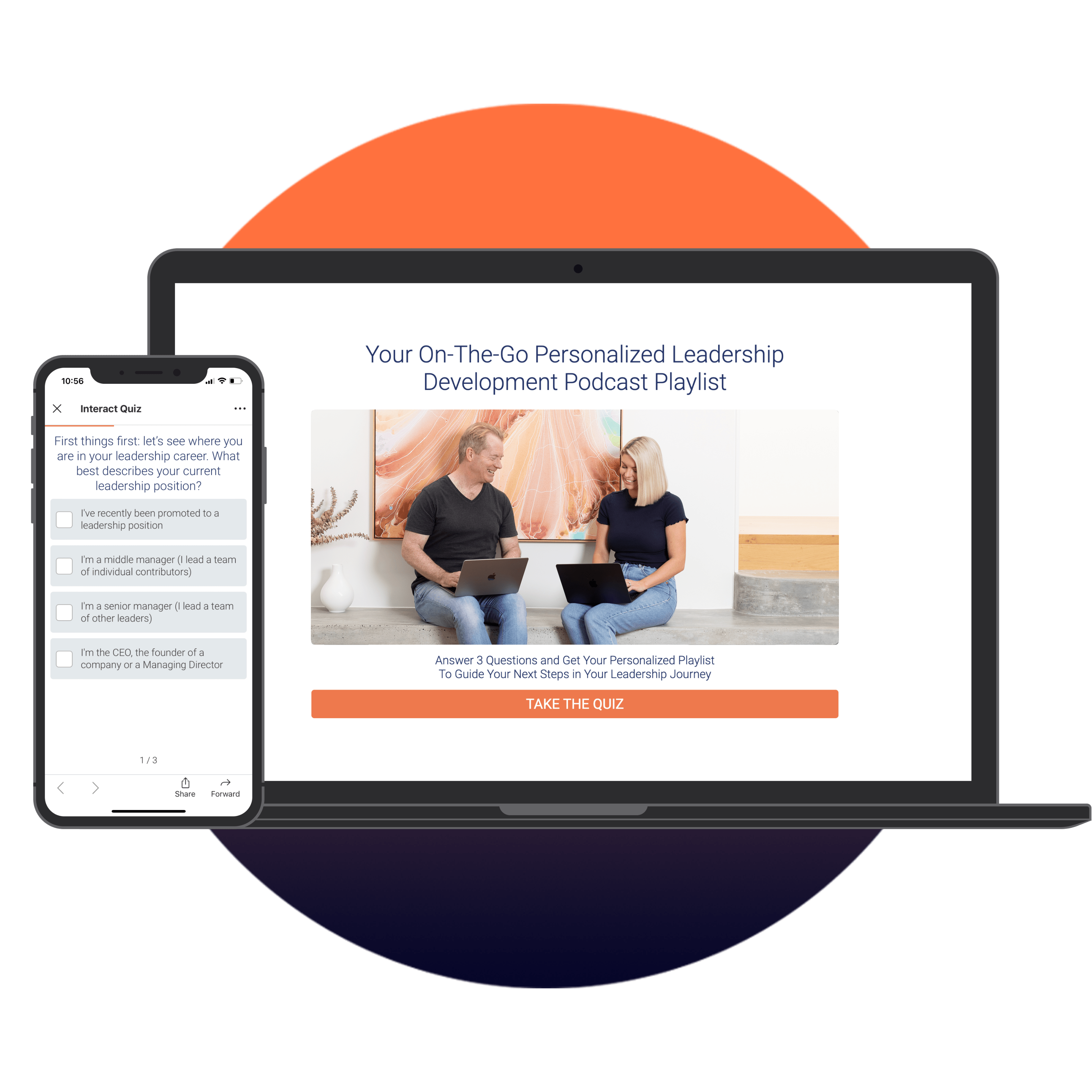
As a leader, it’s essential to constantly develop and improve your leadership skills to stay ahead of the game.
That’s why I’ve created a 3-question quiz that’ll give you a free personalized podcast playlist tailored to where you are right now in your leadership career!
Take the 30-second quiz now to get your on-the-go playlist 👇
Transcript
Episode #400
8 Years, 400 Episodes, and the Lessons We Learned the Hard WayWhat does it actually take to build a top-ranked leadership podcast from scratch and keep it going for 400 weeks in a row? In this special milestone episode, Marty and I pull back the curtain on Your CEO Mentor for the first time, sharing the wins, the failures, the decisions we got wrong, and the lessons we’ve never shared publicly before.
8 years ago, I convinced Marty to walk away from his role as CEO of a multi-billion dollar business to build a micro startup with a deceptively simple premise: give away your very best insights for free, and trust that the impact will follow. What followed was 400 episodes (570 if you count the short Monday episodes), over 8 million downloads, a global audience, and more hard-earned lessons than either of us ever expected!
Here are the five lessons that shaped us most.
1. Loving the Work Won’t Save You From Burnout
You’ve heard the saying “Do what you love and you’ll never work a day in your life.” I don’t buy it, and I’ve learned that lesson firsthand, multiple times.
It’s happened to me about 3 times in the business, and what’s interesting about burnout is that it doesn’t always look dramatic. There wasn’t some big breakdown moment for me. It was more subtle. Something good would happen, something I’d normally be really excited about, and I just couldn’t get around it. I felt completely blasé. Mentally flat, couldn’t focus, going through the motions even though I was still showing up.
For Marty, the burnout showed up differently, as a creative challenge. Every single week for 8 years, he’s had to generate a unique topic that advances the conversation on leadership, research it, script it, record it, and produce all the accompanying collateral. That’s somewhere between 10 and 12 hours of work behind every 20-minute episode, and that’s the free product.
The lesson: creative intensity has a cost.
Even when you genuinely love what you do, the volume, the pressure, and the consistency required to run a business like this will catch up with you if you’re not managing it deliberately. It’s not a question of if. It’s a question of when, and whether you catch it early enough to do something about it before it takes you out completely.
2. Clarity of Roles Creates Harmony in Relationships
One of the questions we get asked most often is how Marty and I actually work together as a father-daughter business partnership. The honest answer: it works not because we agree on everything, but more often because we don’t.
Alignment isn’t sameness, it’s clarity. When two people in a business agree all the time, that’s not alignment. That’s a blind spot waiting to happen. What makes us work is having crystal-clear accountabilities: who owns what, how decisions get made, and where we push back on each other.
Contrary to what people might expect given Marty’s background as CEO of a multi-billion dollar corporation, I’m the Chief Executive of Your CEO Mentor. Marty is the content creator, “the talent”, as I like to call him! Stepping into that role wasn’t something I had a roadmap for, and leading someone who had actually been a CEO at a scale most people never get near was a very particular kind of pressure. But I’ve learned that leading Marty doesn’t mean overriding him. It means being clear about where the accountability sits and having the confidence to own it.
Our different styles are what make us work. I’m highly innovative, always looking for new ways to add value, and left to my own devices I’d probably be constantly chasing the next thing. Marty is the conservative counterweight, focused on the fundamentals and managing risk. Without his counterbalance, we’d be pulling in a bunch of different directions and not executing any of them particularly well. Without my energy and willingness to experiment, we’d just keep doing what’s always worked. Together, the combination is genuinely better than either of us individually.
3. Question Everything, Especially What’s Working
Most businesses that plateau aren’t the ones that failed. They’re the ones that got really good at something and just kept doing it, even as the market moved or better opportunities emerged, because they couldn’t bring themselves to challenge what was already working. I’ve had to learn this lesson more than once.
The podcast and Leadership Beyond the Theory are our clearest wins, and I think what made them work wasn’t luck. It was deliberate choices and sustained commitment. Over 25% of each LBT cohort now comes through referrals, which means to me that the program is genuinely delivering results. You can’t manufacture that.
The misstep was evergreen courses. A few years ago I chased shorter, cheaper, more accessible courses that I thought people wanted. If I’m really honest, I was a bit bored of marketing LBT and I let a shiny object pull me away from what was actually working. They didn’t land, and there was a significant hole in the P&L to show for it. Lesson learned!
The hardest decision was pausing the Business Accelerator Program. BAP is a program for CEOs and one of both Marty’s and my favourite things we do. I love the depth of it, getting right inside someone’s business and helping them move forward. But it’s not our most profitable product, and we completely go above and beyond in delivery, which means it costs more to run than we properly account for. I recently made the call to pause new intakes, and it honestly felt like killing off a favourite character in a TV show, I had the blues for a couple of weeks!
But when I stripped the emotion out of it and asked the real question, whether this was going to help us achieve our goal of helping more and more people improve their leadership as the AI era rolls out, the answer was no. That’s what questioning everything actually looks like in practice. It’s not just the stuff that isn’t working. Sometimes it’s the things you love the most.
4. Global Sounds Sexy. It’s Operationally Hard.
There’s an idea that going global is the ultimate sign that you’ve made it. For us, in many ways, it is. 8 million podcast downloads, listeners in almost every country, a Wall Street Journal bestselling book published in the US market. That’s real.
What we had to learn the hard way was that distance amplifies every weakness in your operation.
When Marty moved to Boston in 2021 for 4 years, things that could once be fixed with a quick conversation started taking half a day. Communication had to be tighter, standards had to be more explicit, and the informal gut checks that are the engine of a real partnership had to be engineered deliberately. I found that really difficult.
What I noticed was that we almost stopped building the business together. We were doing our own thing in our own silos and catching up when the time zones allowed. That might sound more personal than operational, but it is operational. So much of what makes our partnership work is the informal stuff, the quick conversations, the ability to think out loud with someone who knows the business as well as you do. When you lose that, you feel it in the work.
The lesson for me wasn’t just about tightening the communication process. It was about recognising that proximity has real value, and when you can’t have it, you have to be incredibly intentional about replacing what it gives you. Otherwise you’re not really partners. You’re just running parallel business units and hoping they stay aligned.
5. Milestones Don’t Give You What You Think They Will
Every founder has a version of this story. The milestone that was supposed to mean everything, and then it didn’t. I’m no exception!
I thought when we hit $1mill in revenue, I was going to go buy this Chanel watch I loved. I just thought a switch would flick and I’d have this moment of, “Yes. We made it. We’re a real business.” I just didn’t. There was a beat of satisfaction and then almost immediately my brain moved to the next thing. $2mill happened the same way, and so did every milestone after that. The feeling I was chasing just never arrived in any lasting way.
This isn’t just a business owner problem. It’s the same whether your number is a salary target of $100K or $800K. The goalpost keeps moving, and the satisfaction you think you’ll feel when you get there doesn’t show up the way you expect.
What does land for me are the moments. A leader coming up to us after a live event in tears, telling us that the program had given him and his partner the confidence to back themselves after both being made redundant, and that they’re now living their best lives. The weekly emails and DMs from people saying that this podcast changed the trajectory of their life.
When you understand that something you’ve built genuinely changed the trajectory of someone’s life, that’s what lands. Not the revenue milestone. Not logging into the bank account. The impact.
Somewhere along the way, that shift happened for me from chasing revenue goals to chasing impact goals. And honestly, I think it made us better at both. When the why is that clear, the work has a different quality to it.
What’s Next
As we head into the next chapter, we’re leaning hard into the AI era. We’re building a product right now that I’m genuinely excited about, designed to be a daily companion for every leader in our community. The goal is the same as it was on day one: maximum impact on the quality of leaders globally. The way we’re delivering it is evolving fast.
To everyone who has listened, shared, reviewed, and reached out over the past 8 years: THANK YOU!
YOUR SUPPORT MATTERS
Here’s how you can make a difference:
Subscribe to the No Bullsh!t Leadership podcast
Leave us a review on Apple Podcasts
Repost this episode to your social media
Share your favourite episodes with your leadership network
Tag us in your next post and use the hashtag #nobsleadership
- Join our Free Leadership Community on Skool